An American Vision
Finally Realized

A Monument To The American Spirit

For 250 years, Americans have triumphed over war, division, and hardship. Against impossible odds, our people have built a land of liberty where the individual citizen can thrive, prosper, and pursue happiness greater than any other place in the world.

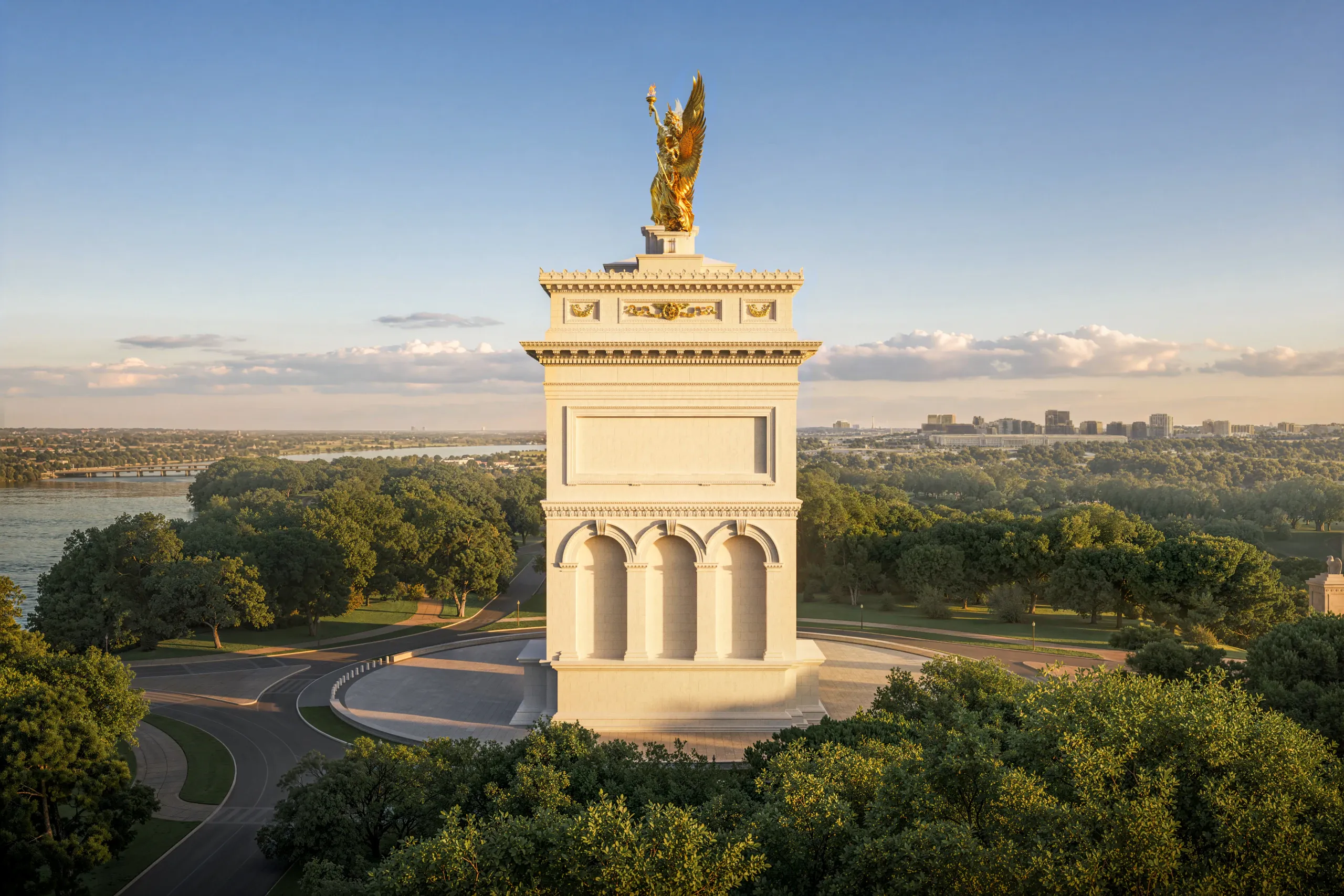
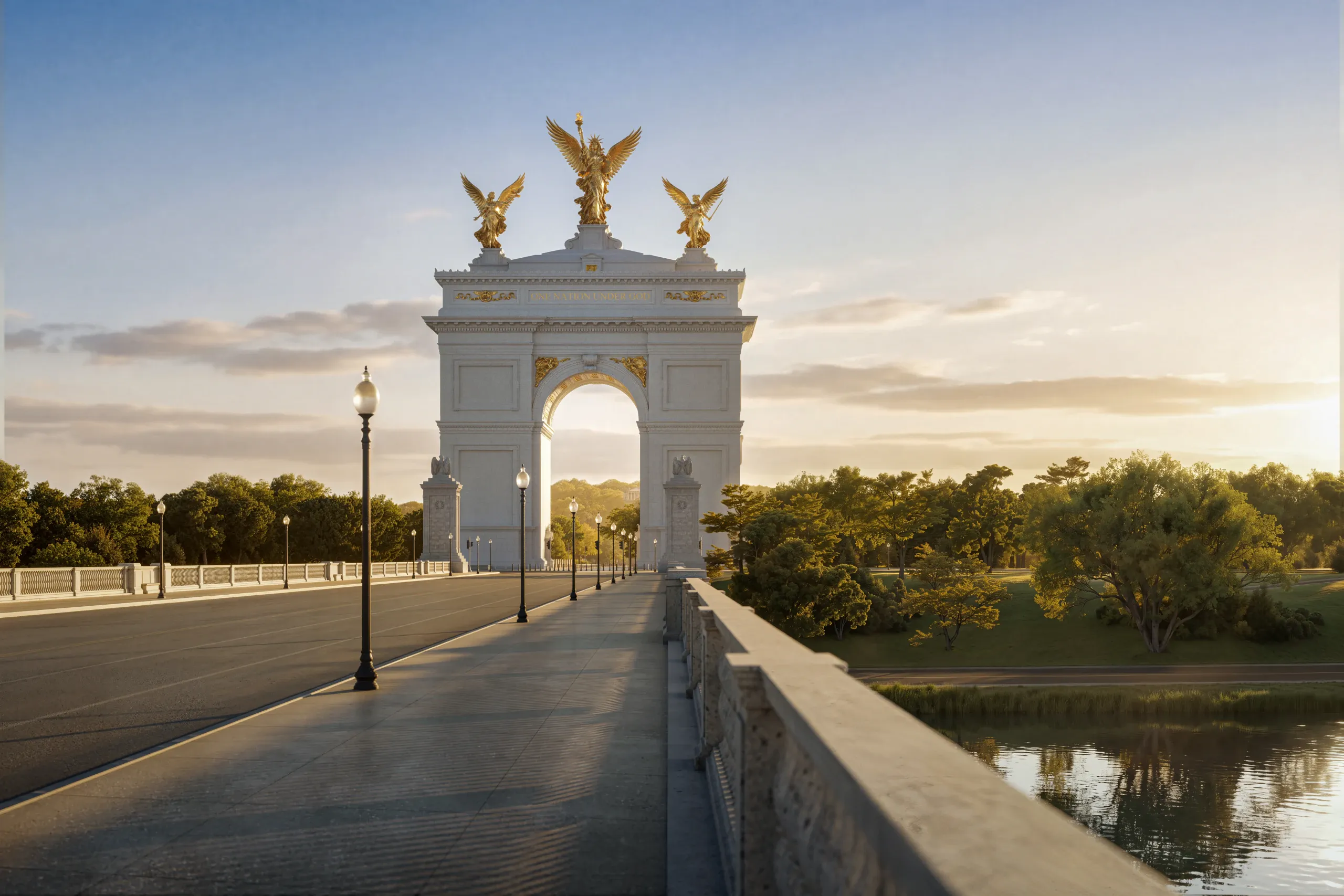
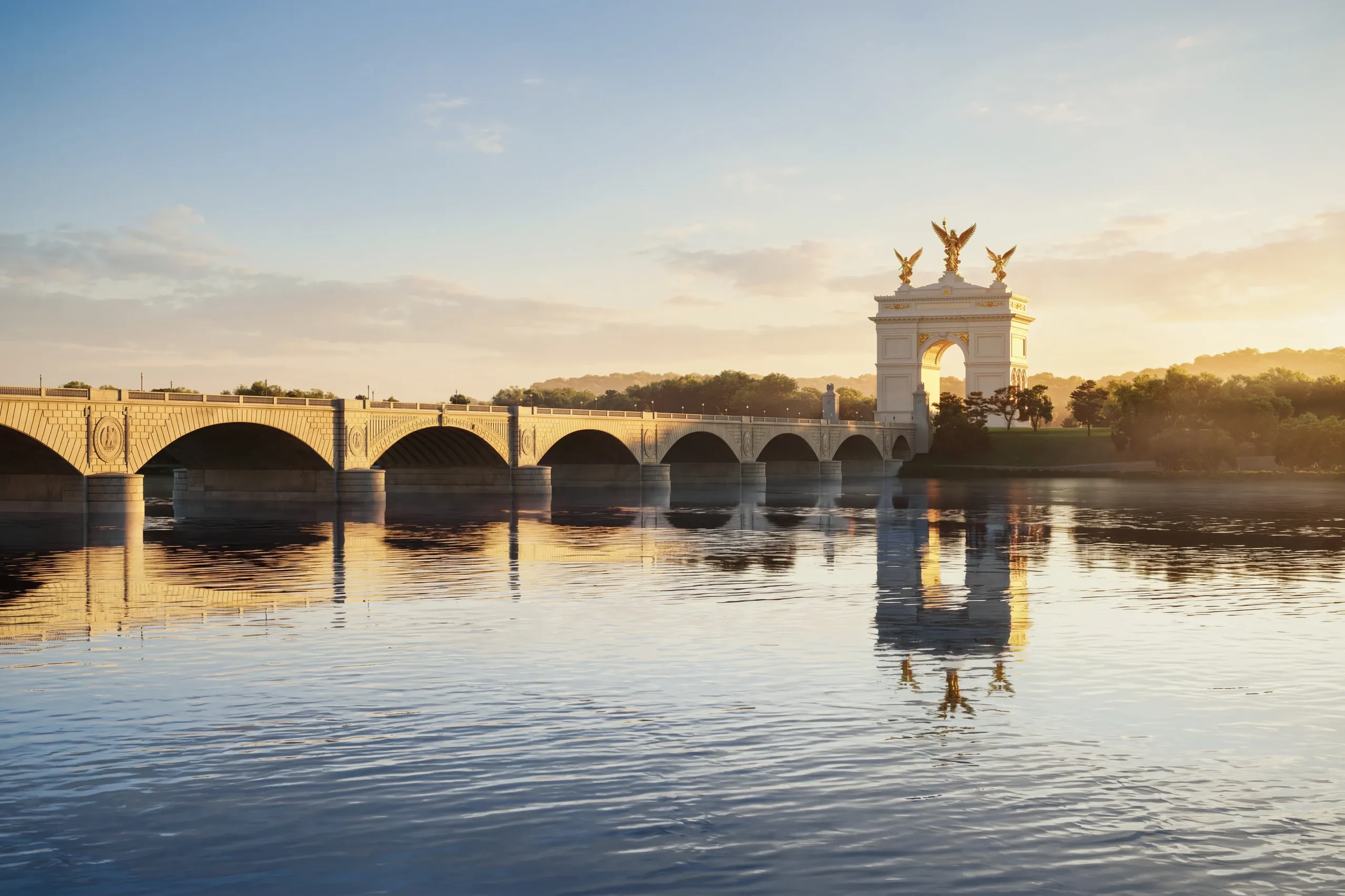
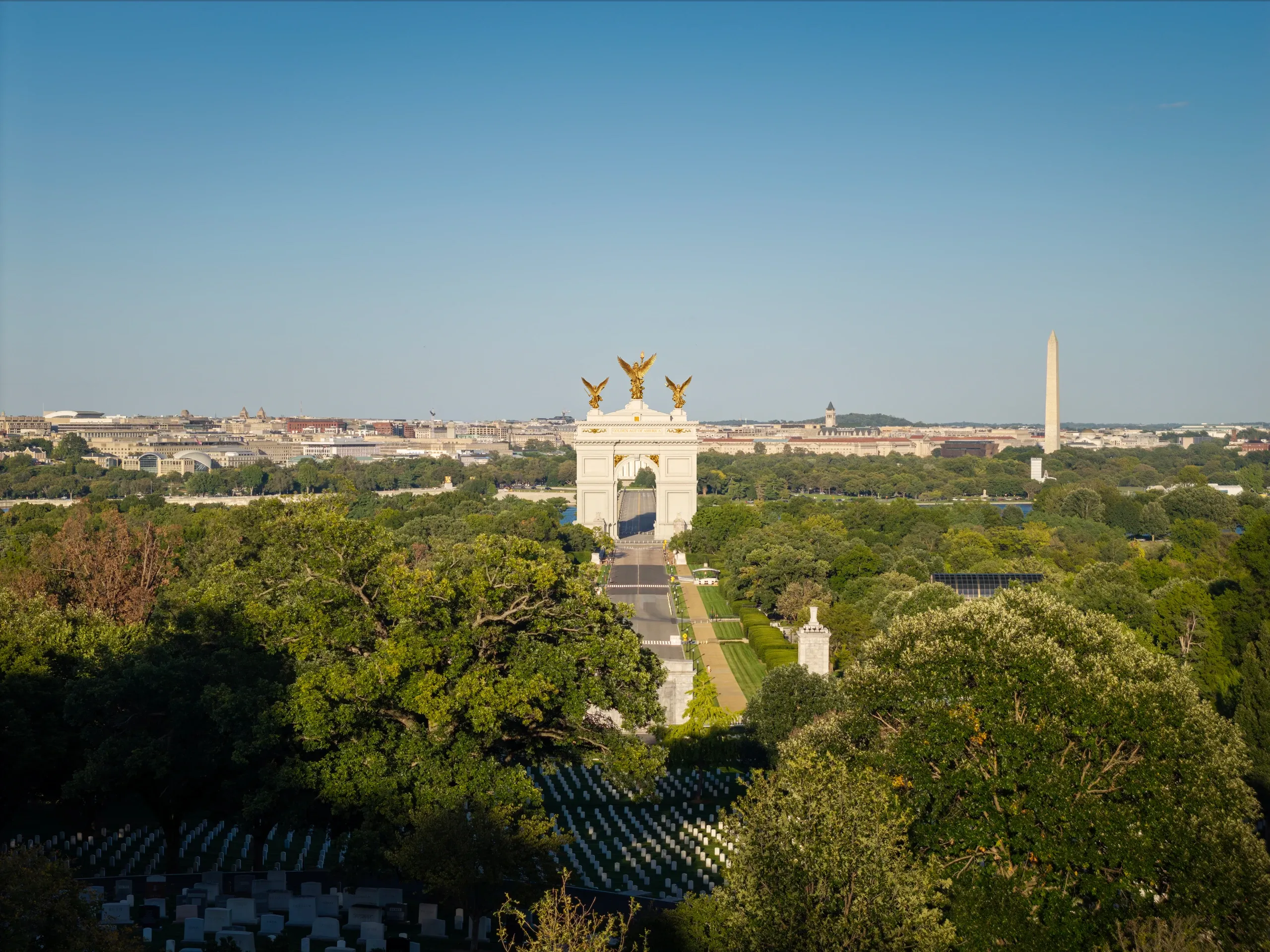
The United States Military Triumphal Arch celebrates America's first 250 years and stands as a symbol of its next 250. It serves as a solemn entrance to Arlington National Cemetery, honoring the heroes who gave their lives for our freedom, and as a grand gateway to the capital of the nation that has been, and will forever be, the greatest force for freedom and goodness in the history of the world.

An American Vision
Finally Realized

A century ago, America envisioned a monument to reconciliation and national unity following the Civil War.

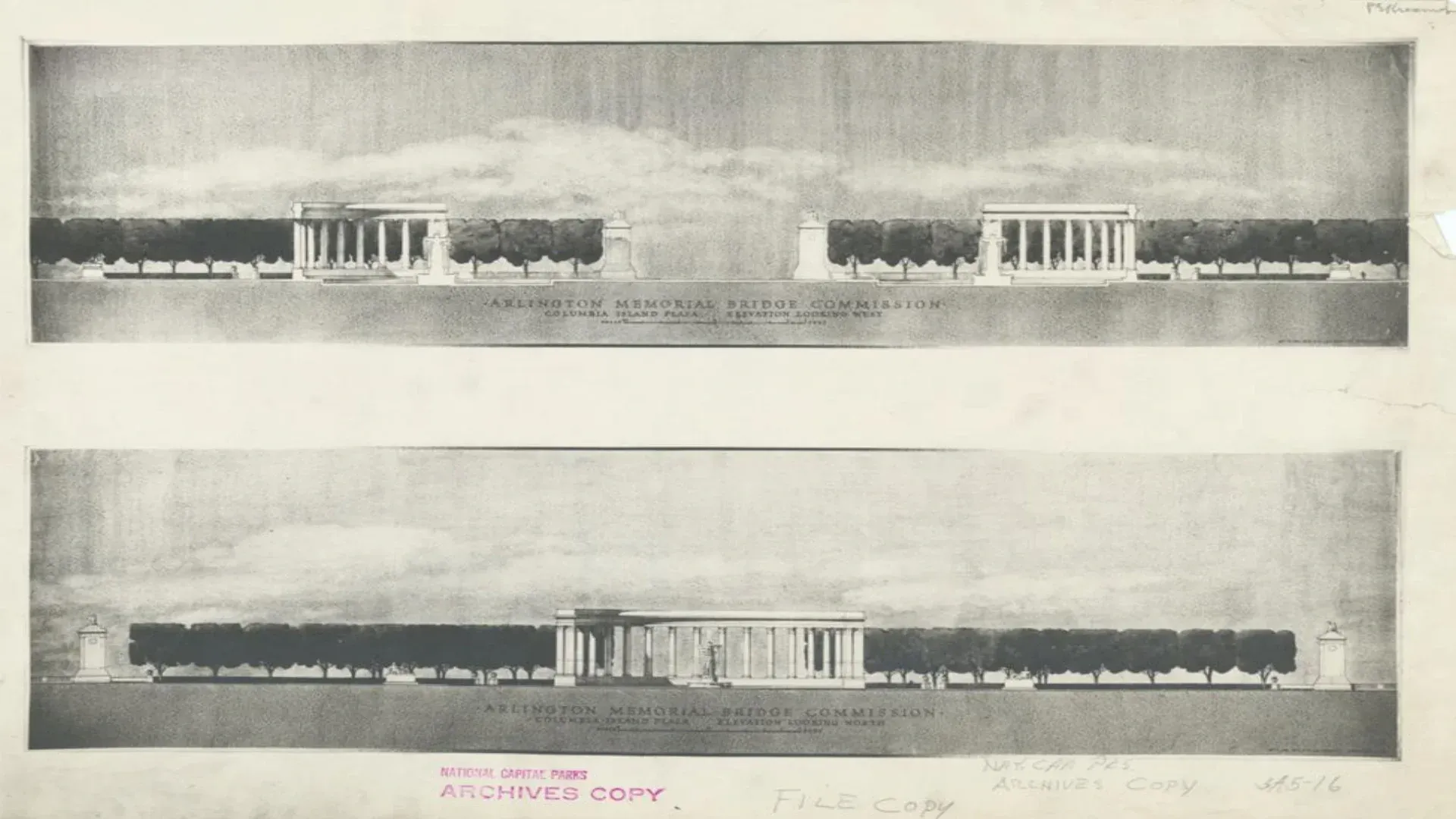
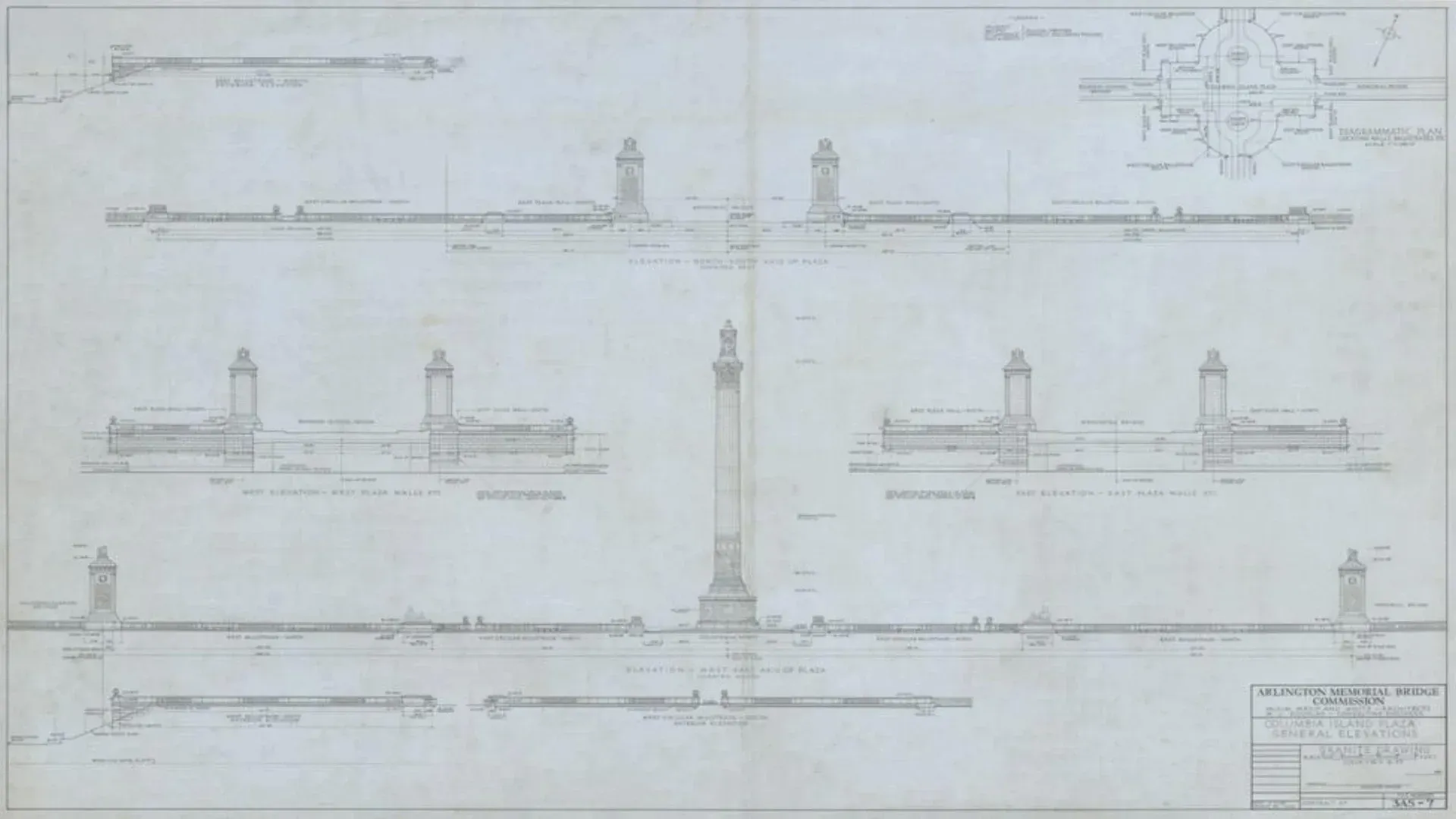
In 1924, the Arlington Memorial Bridge Commission proposed two monumental columns in Memorial Circle, crowned by figures of Victory. One represented the North. The other represented the South. But the columns were never built.

Today, President Donald J. Trump fulfills and expands on this historic civic vision: what began as a celebration of the reconciliation between North and South finds new expression as a celebration of the triumph of the American spirit throughout the full sweep of American history.

The Military Triumphal Arch realizes a century-old ambition for beautiful monumental architecture in Memorial Circle. While such a grand monument was planned and dreamed of by all of America, it was a Dream that never got built because of the onset of the Great Depression of 1929 — But it will get built now.

The Military Triumphal Arch will be an enduring symbol of American Freedom, American Strength, and American Unity. We will fulfill the aspirations of the Great American Patriots who came before us, and whose plans and visions will finally be realized with the start of construction in our 250th year.
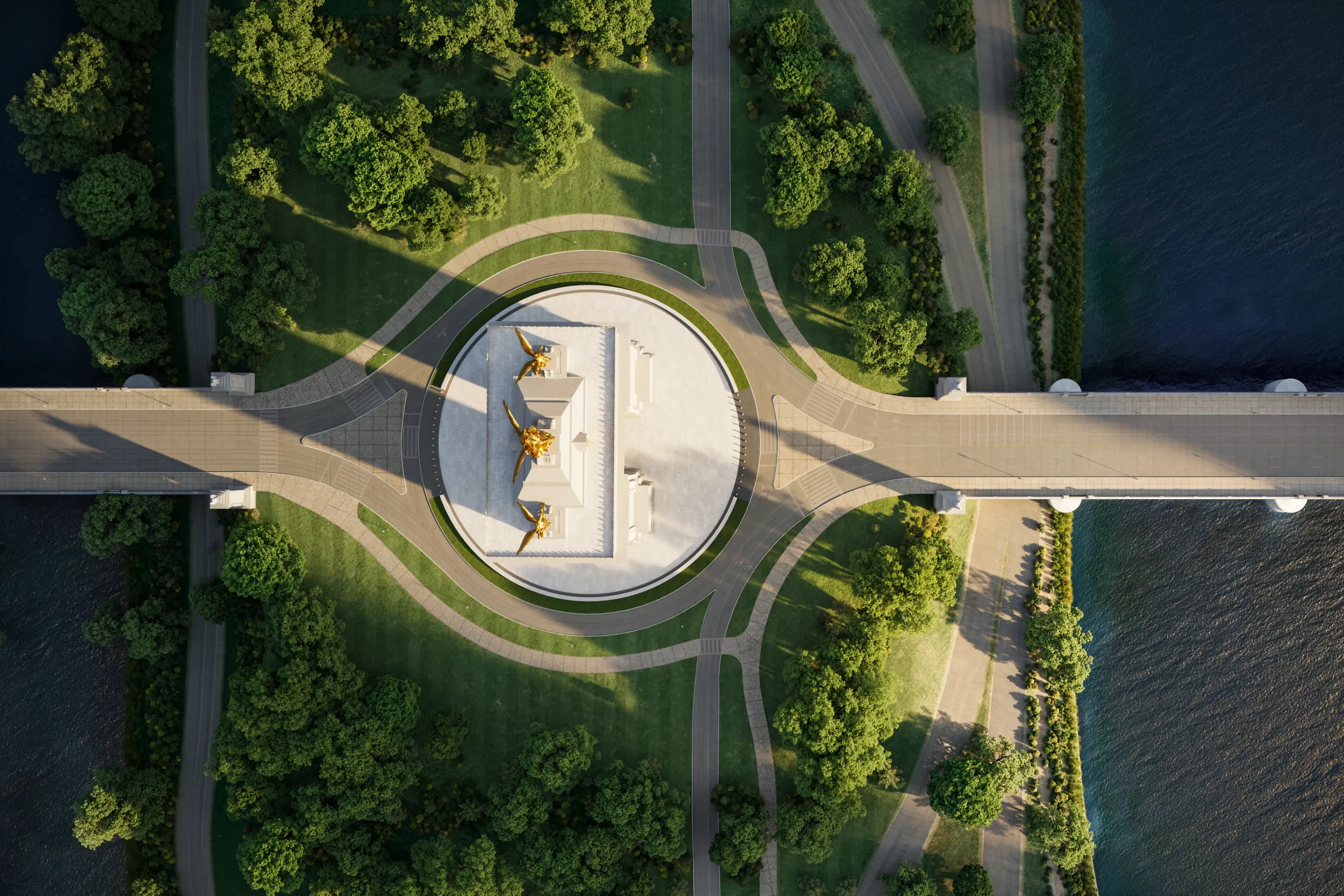
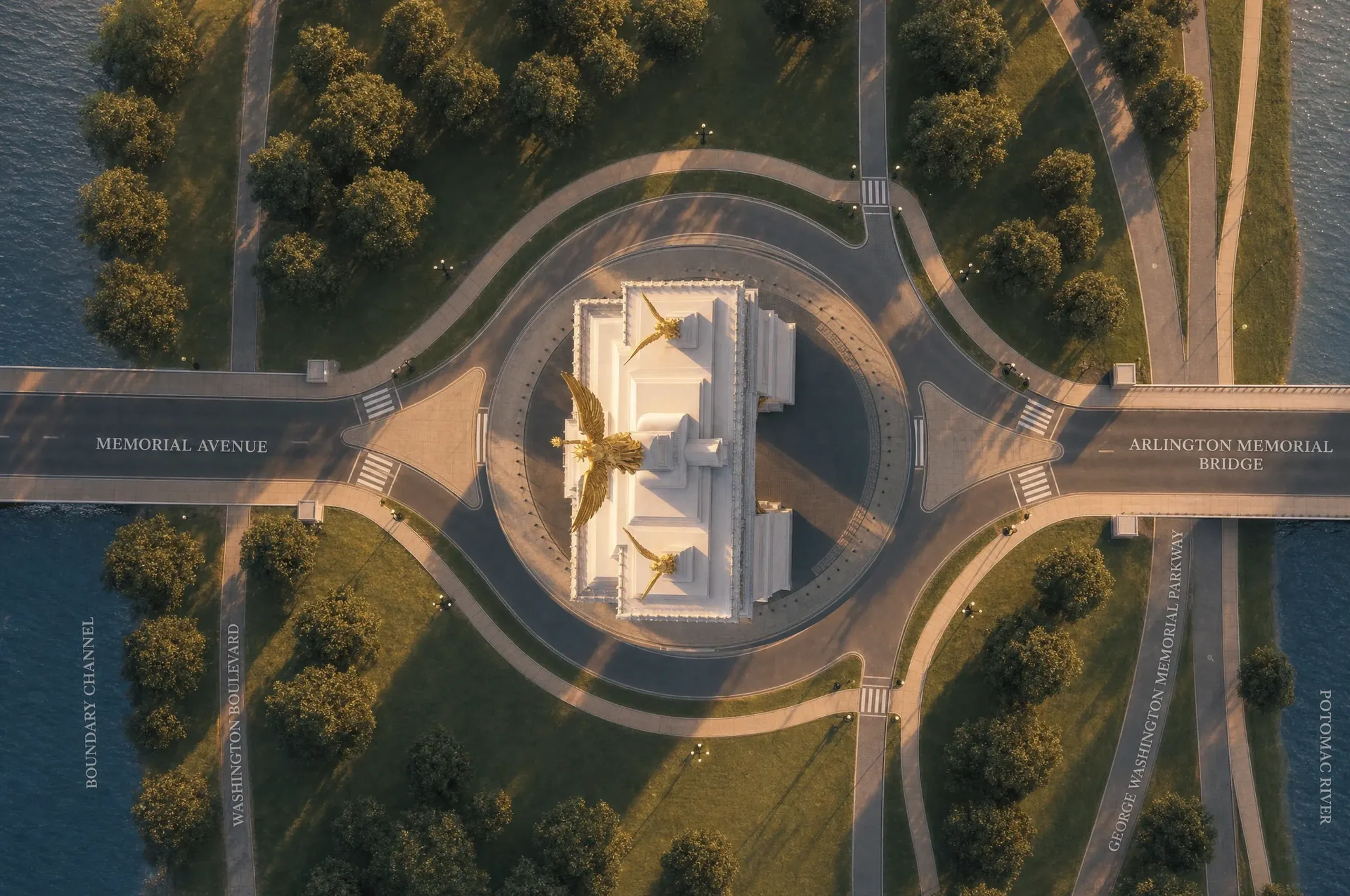
Aerial site plan of the Military Triumphal Arch at Arlington Memorial Circle

A Tribute To Our Heroes

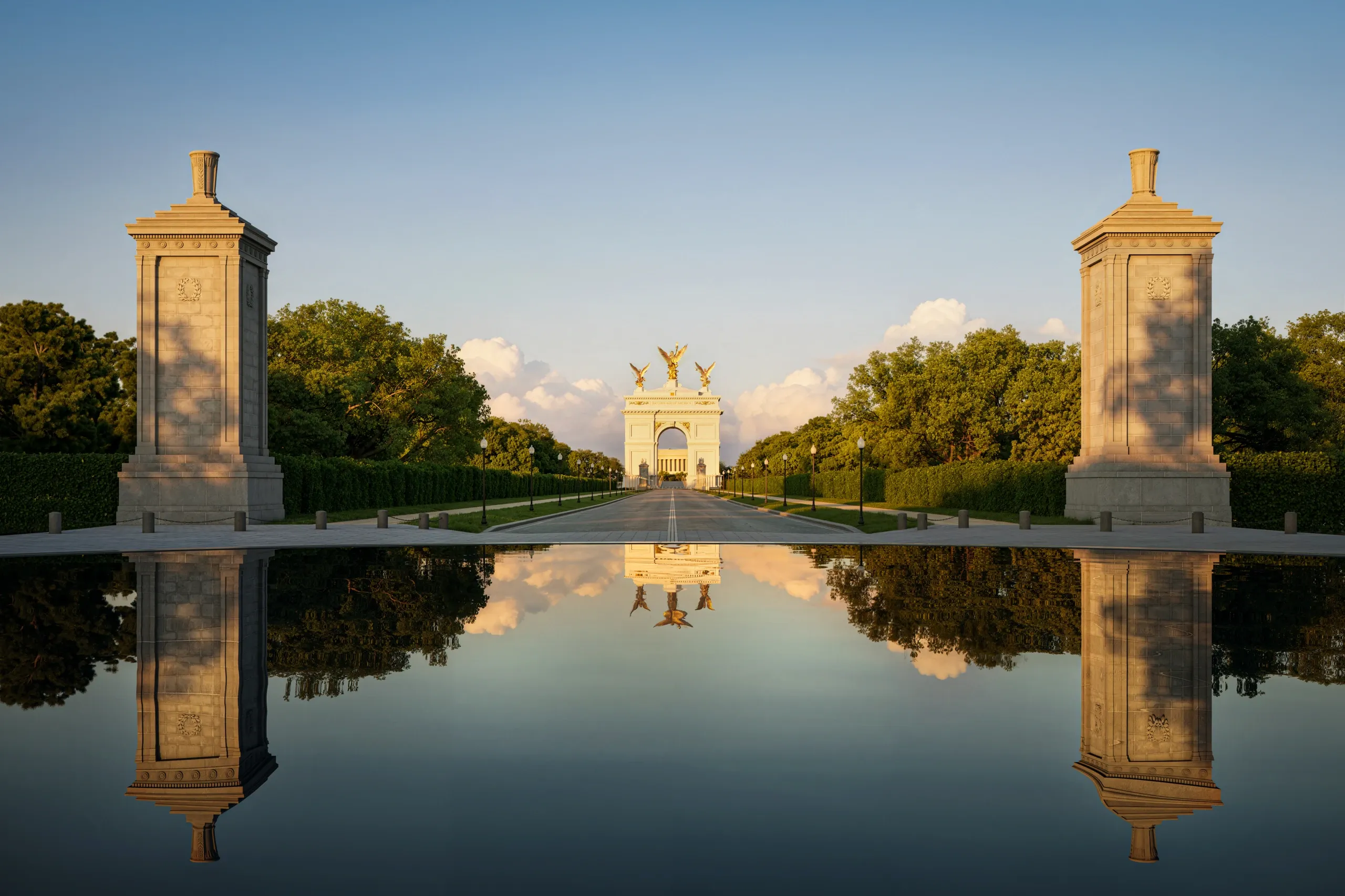
From the Lincoln Memorial, across Arlington Memorial Bridge, to the hallowed grounds of Arlington National Cemetery, an extraordinary ceremonial axis connects the ideals of the American Republic engraved in stone —with the heroes who fought and died to defend them.

The Military Triumphal Arch honors all who have served our country. It will inspire future generations to build an America worthy of their sacrifice.

View on map
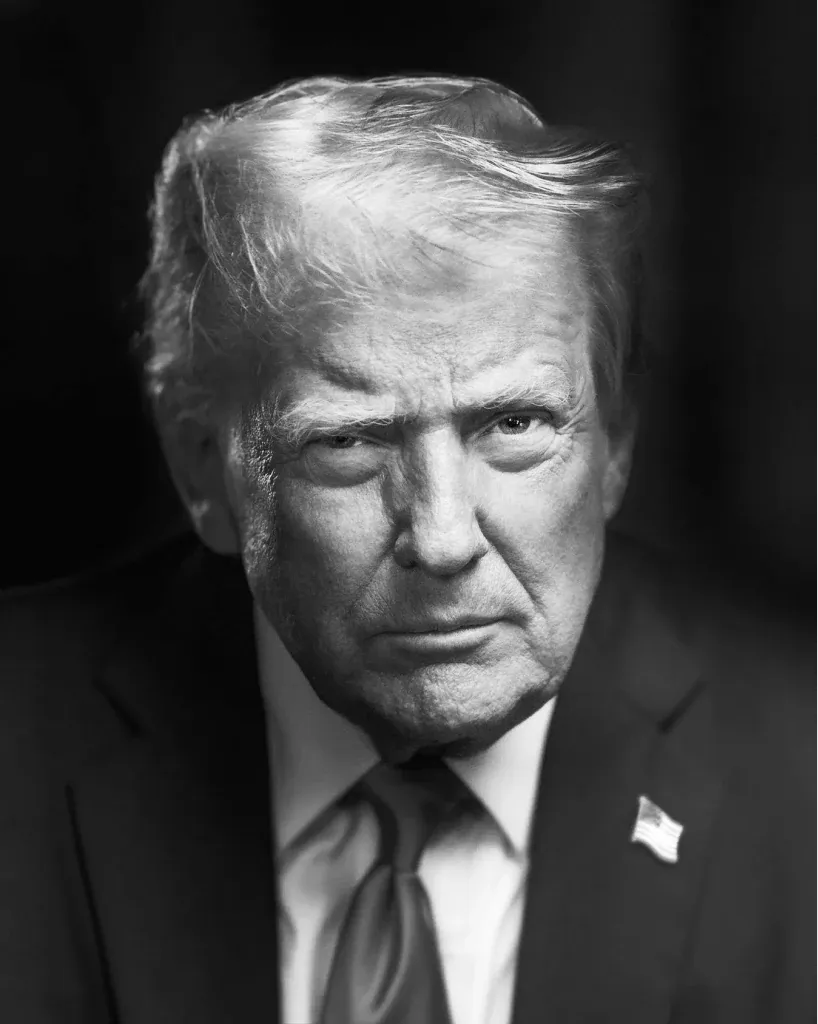
President Donald J. Trump
“This will be the greatest and most beautiful triumphal arch, anywhere in the world.”
Donald J. Trump signature

Donald J. Trump
45th & 47th President of the United States

The Future Begins
With a Step

Great nations remember. Great nations also imagine the possibilities of the future.

The Military Triumphal Arch will honor those who founded, built, defended, and transformed this country, while inspiring new generations to carry forward the American promise.

For centuries to come, Americans will walk beneath this monument with our nation’s history behind them and its future before them, remembering the extraordinary nation they inherited and celebrating the freedom they will pass on.
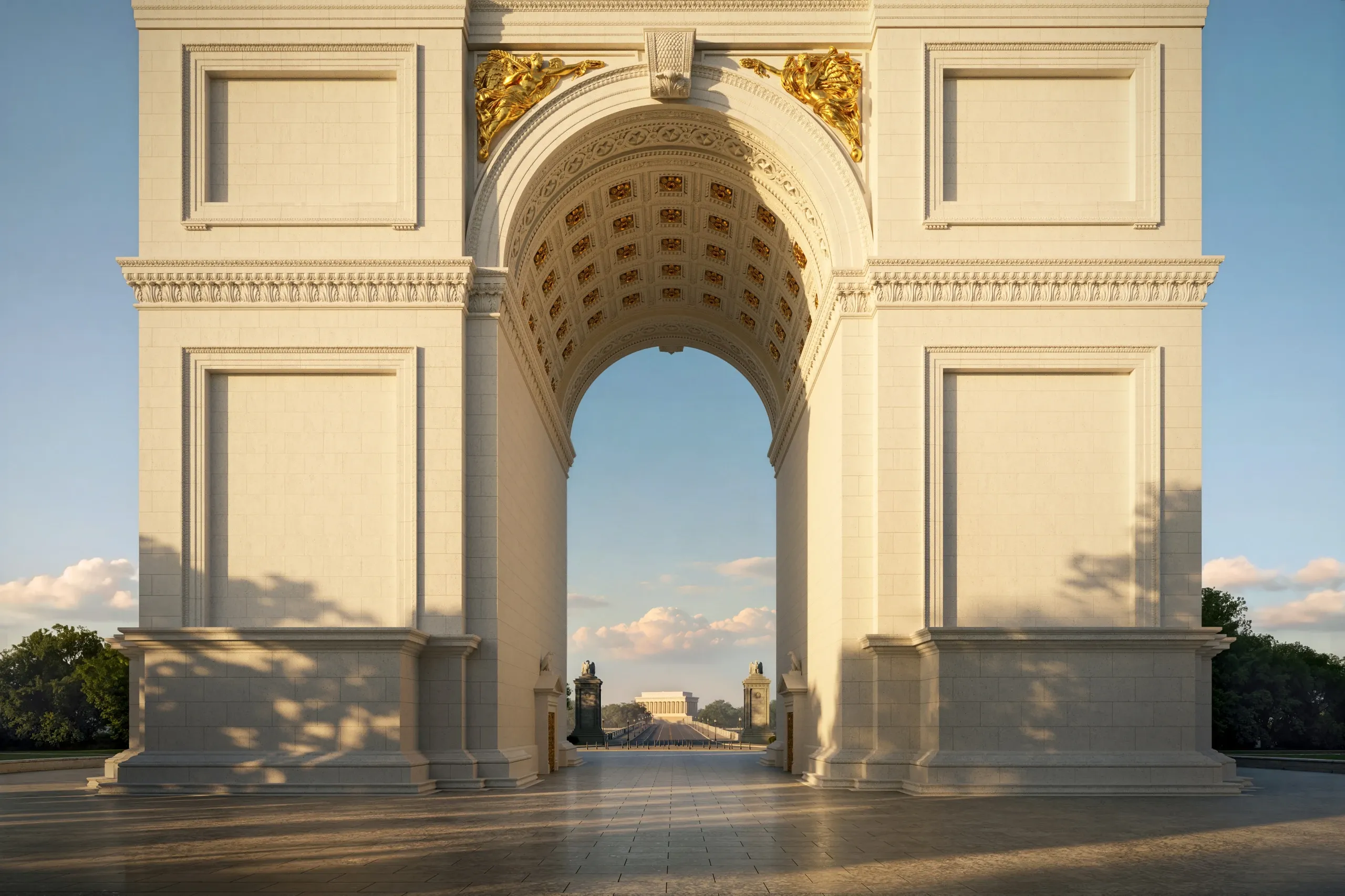
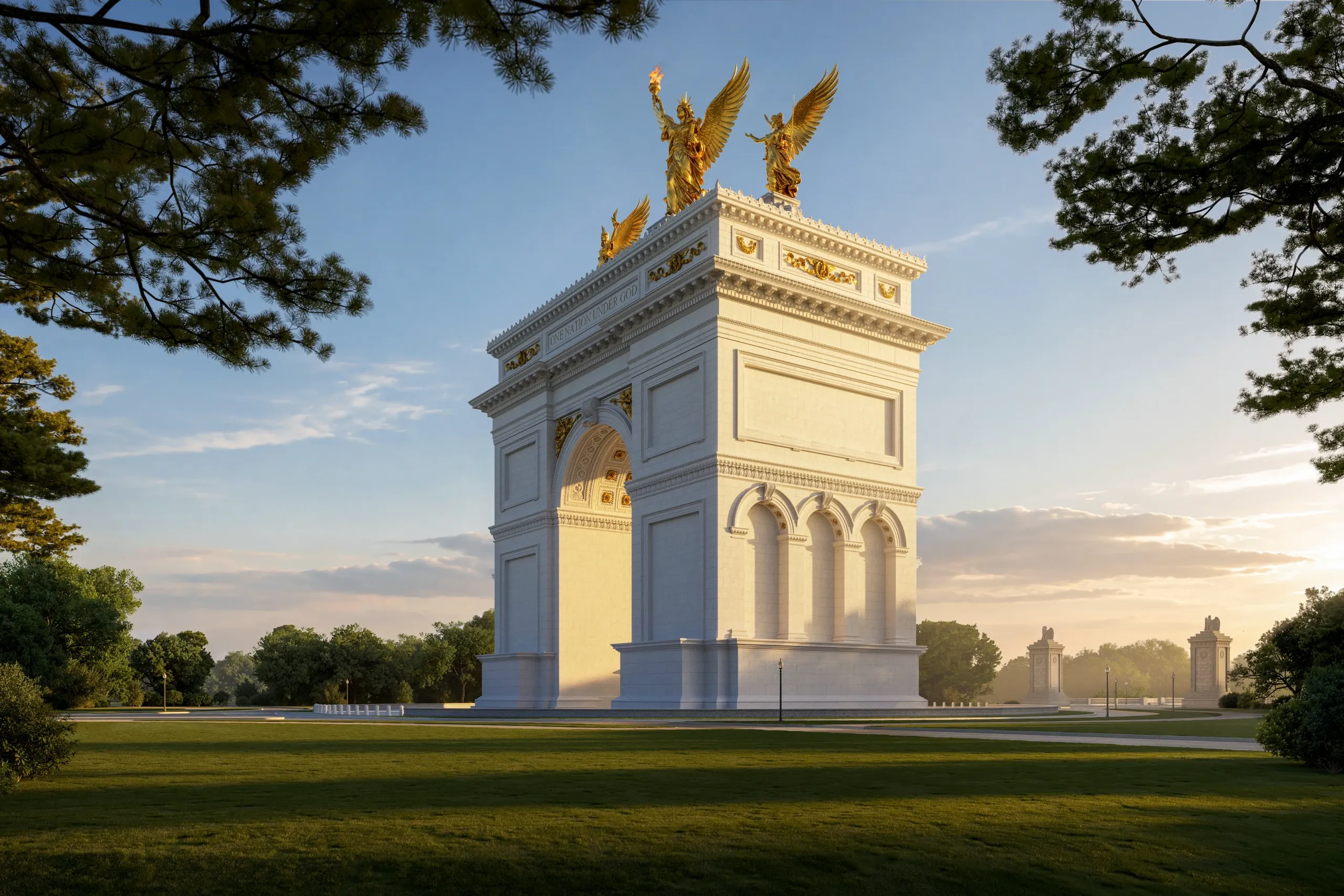
The Military Triumphal Arch will complete a long overdue memorial to honor our nation’s heroes and provide a fitting entrance to the sacred grounds of Arlington National Cemetery. For more than a century, federal planners have envisioned a monument to complete Columbia Island—the plot of land between Memorial Bridge and Arlington Cemetery, which is now known as Memorial Circle.

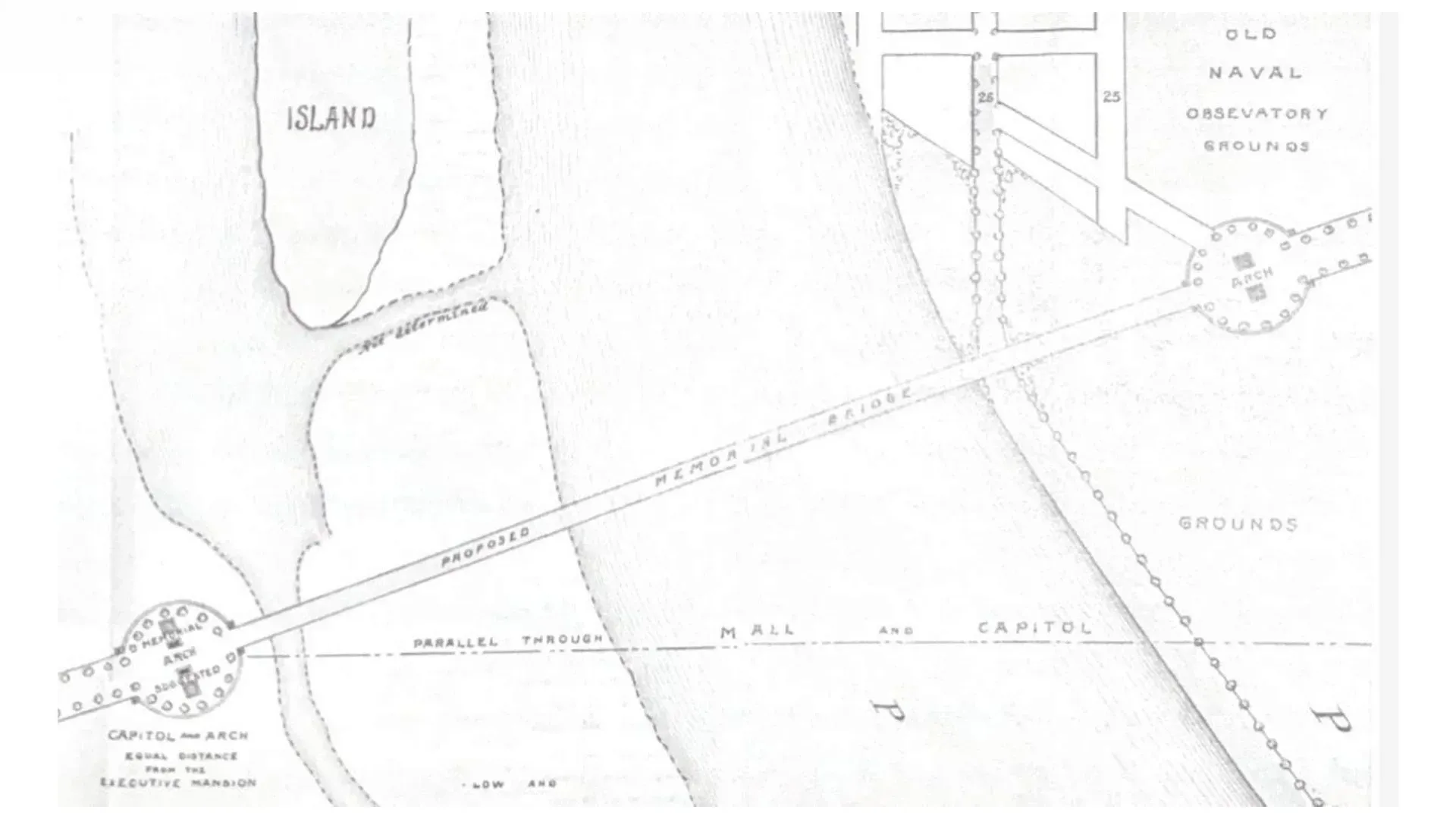
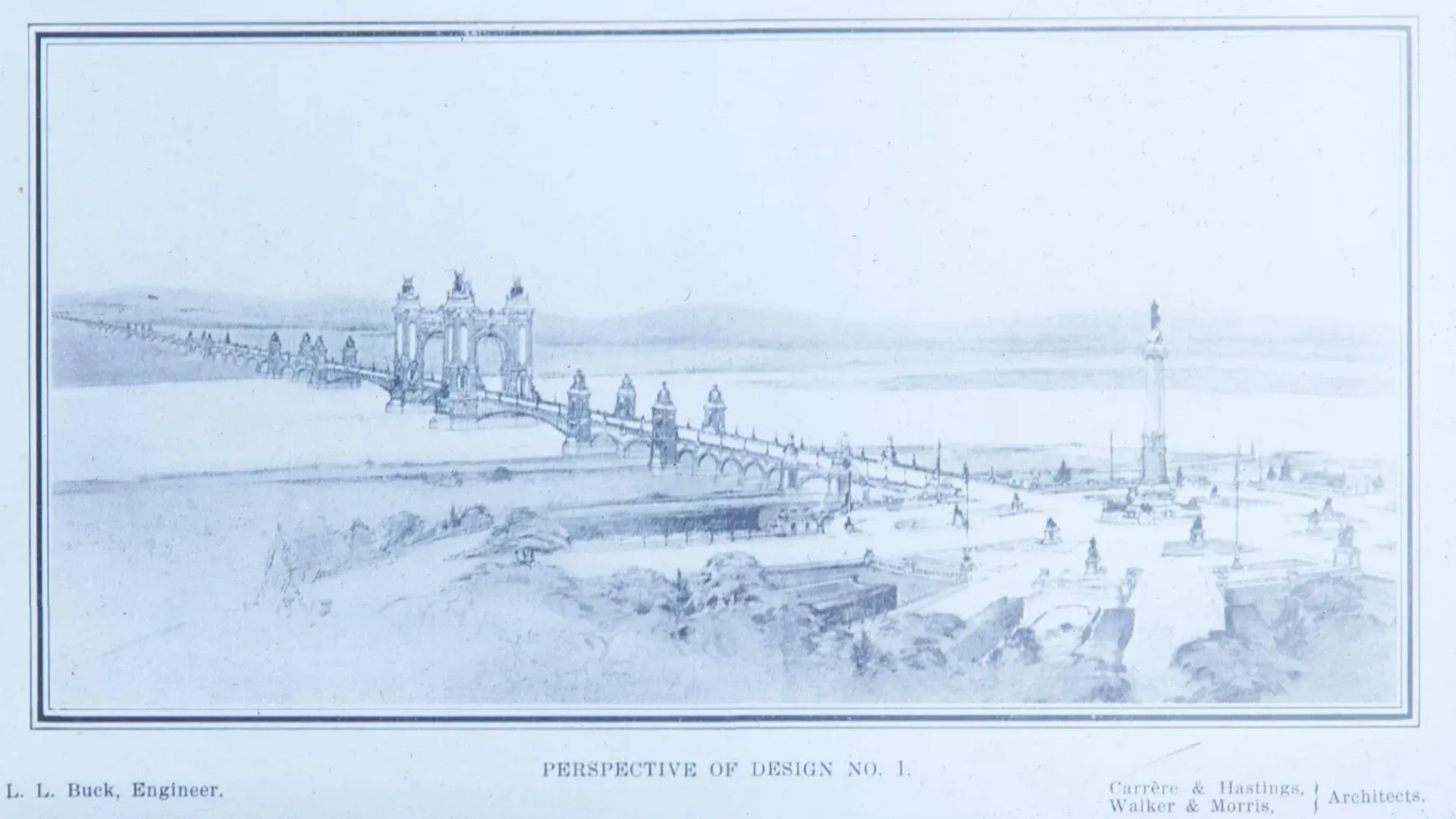
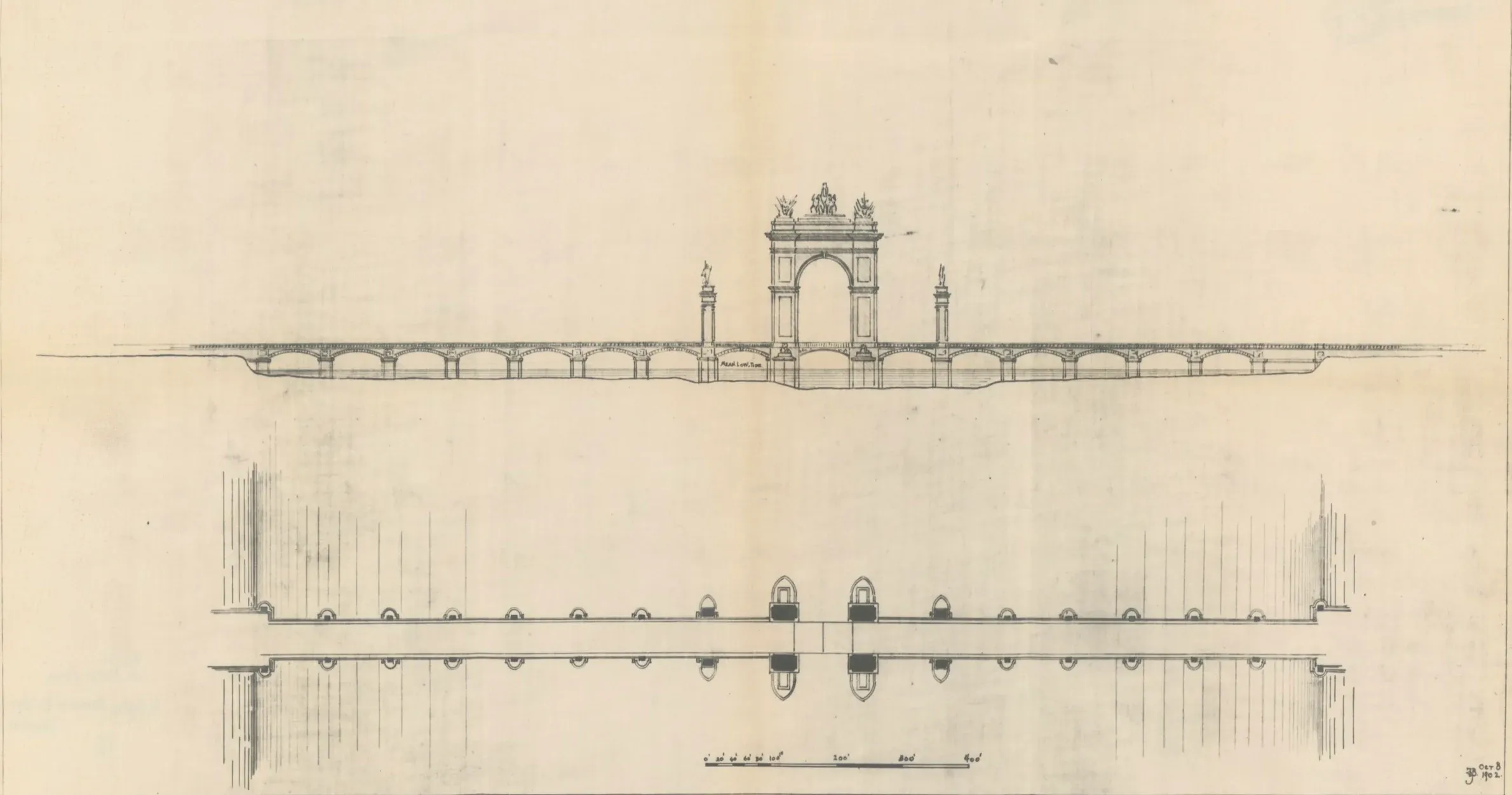
Since before the Civil War, Americans have dreamed of a monumental structure spanning the Potomac to symbolize the unity of North and South. President Jackson envisioned a grand bridge across the Potomac “as a symbol of the firmly established union of the North and the South!” And Senator and Secretary of State Daniel Webster dreamed of spanning the river “with arches of ever-enduring granite, symbolical of the firmly established union of the North and the South.” After the Civil War, Americans submitted numerous designs for monumental works connecting Arlington National Cemetery with Washington, DC, including monumental arches on both side of the Potomac and on Columbia Island.

Architectural elevation with a central triumphal arch, circa 1900

Finally, in 1925, Congress enacted a law authorizing the Executive Branch to construct a memorial linking the Lincoln Memorial to Arlington National Cemetery. The 1925 Act was the culmination of a decades long process to create a unified monument to link DC and Virginia—and the North and the South.

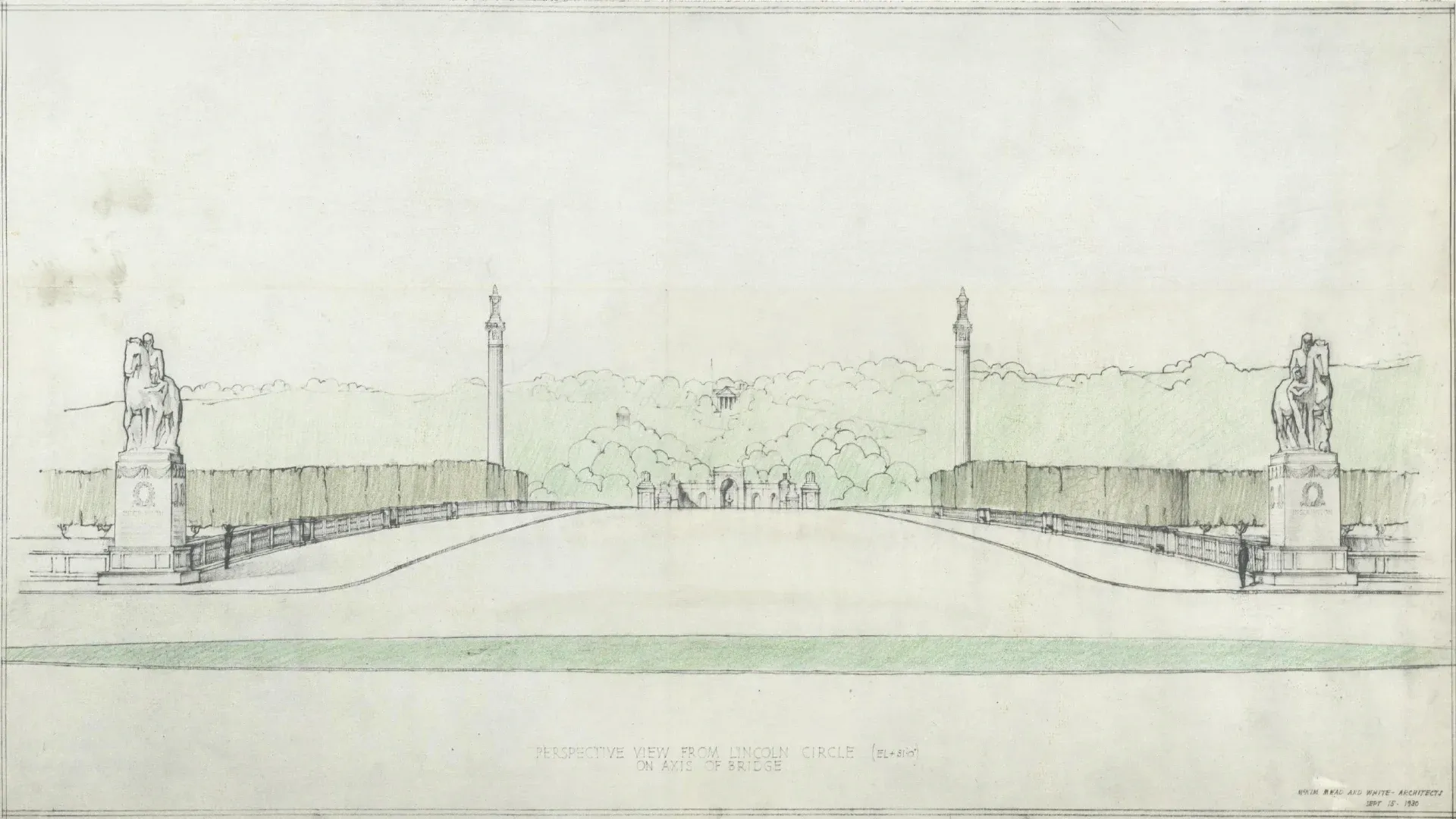
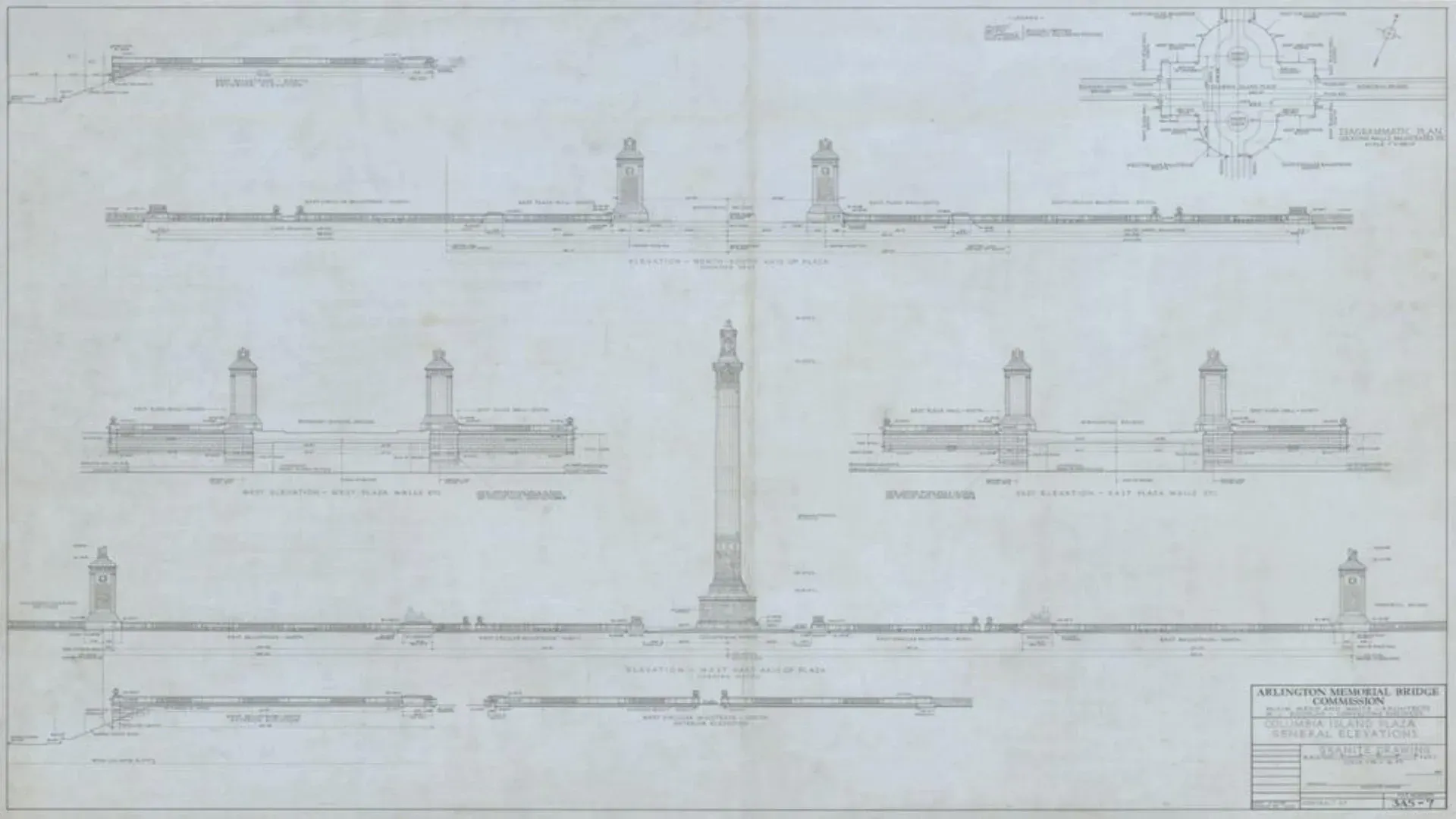
Studies for monumental columns at the bridge approach, 1930

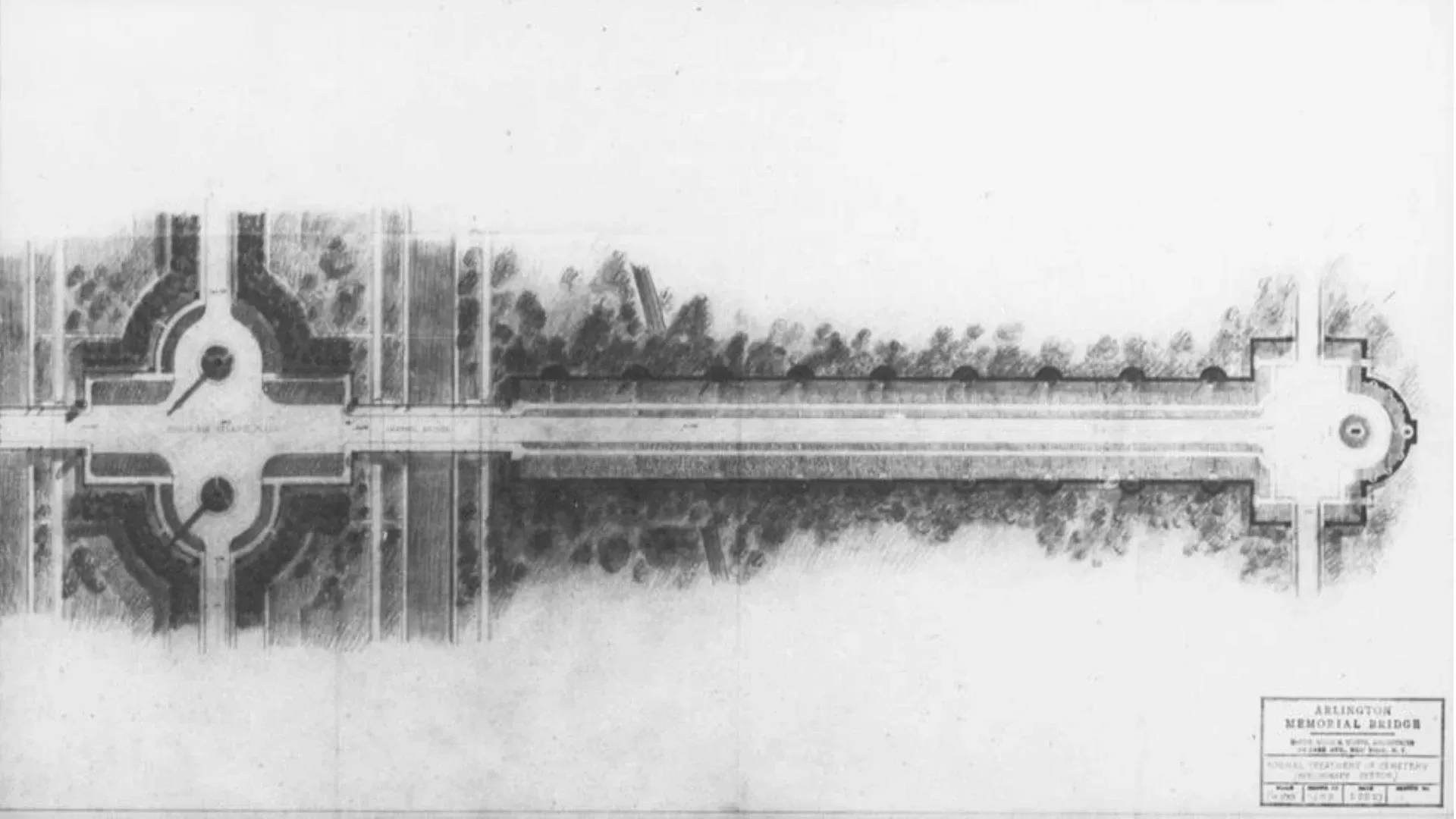
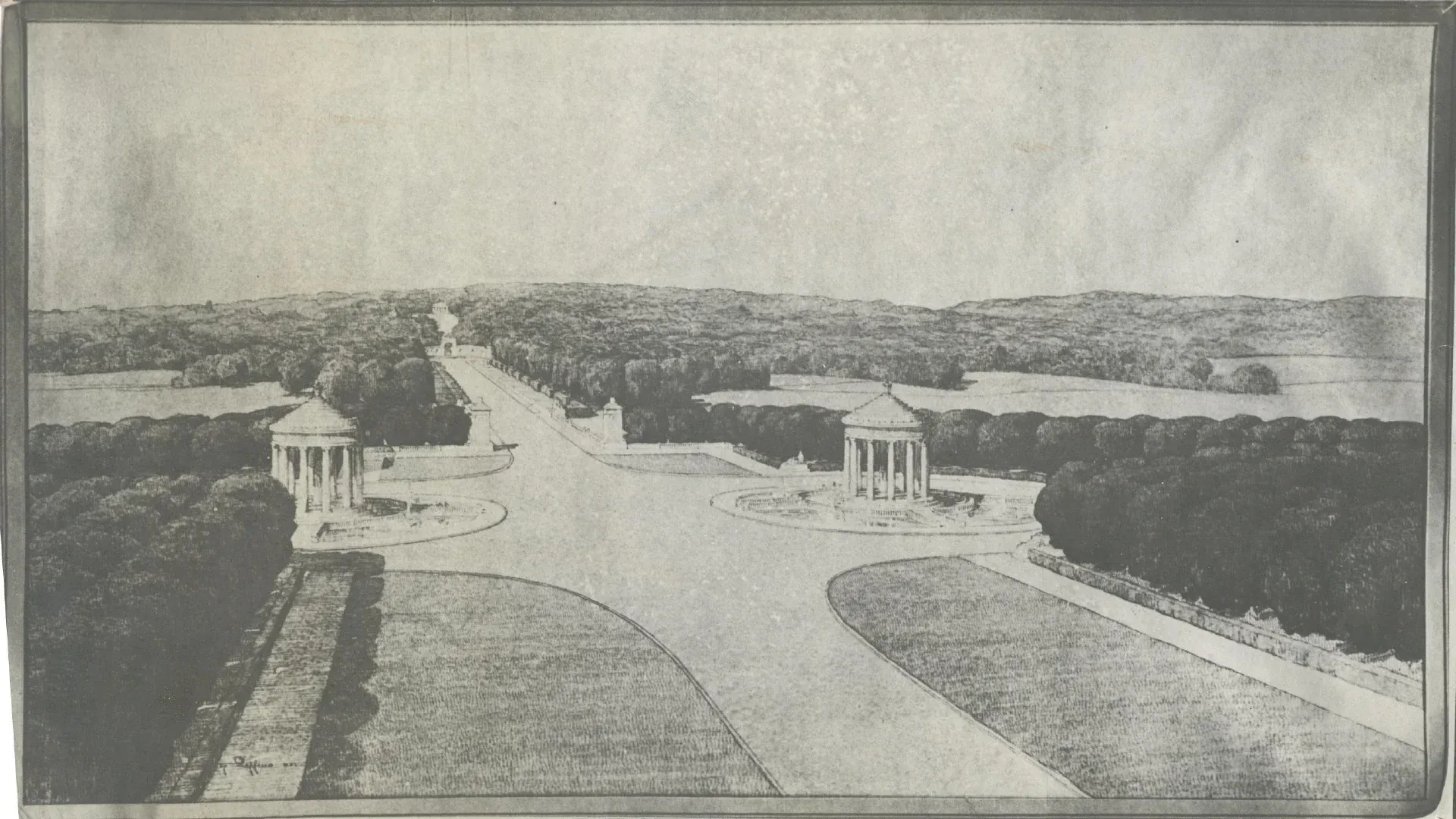
The crowning jewel of this project was to be a plaza on Columbia Island between Arlington Cemetery and the Lincoln Memorial. This plaza was designed to symbolize the enduring unity of North and South and provide an entrance to Arlington Cemetery worthy of the men and women who fought, bled, and gave their lives for our freedom. Under the 1925 plan, two 166-foot columns decorated by allegorical figures would adorn the plaza.

Graphics of Columbia Island columns were proposed in the 1924 Arlington Memorial Bridge Commission report.

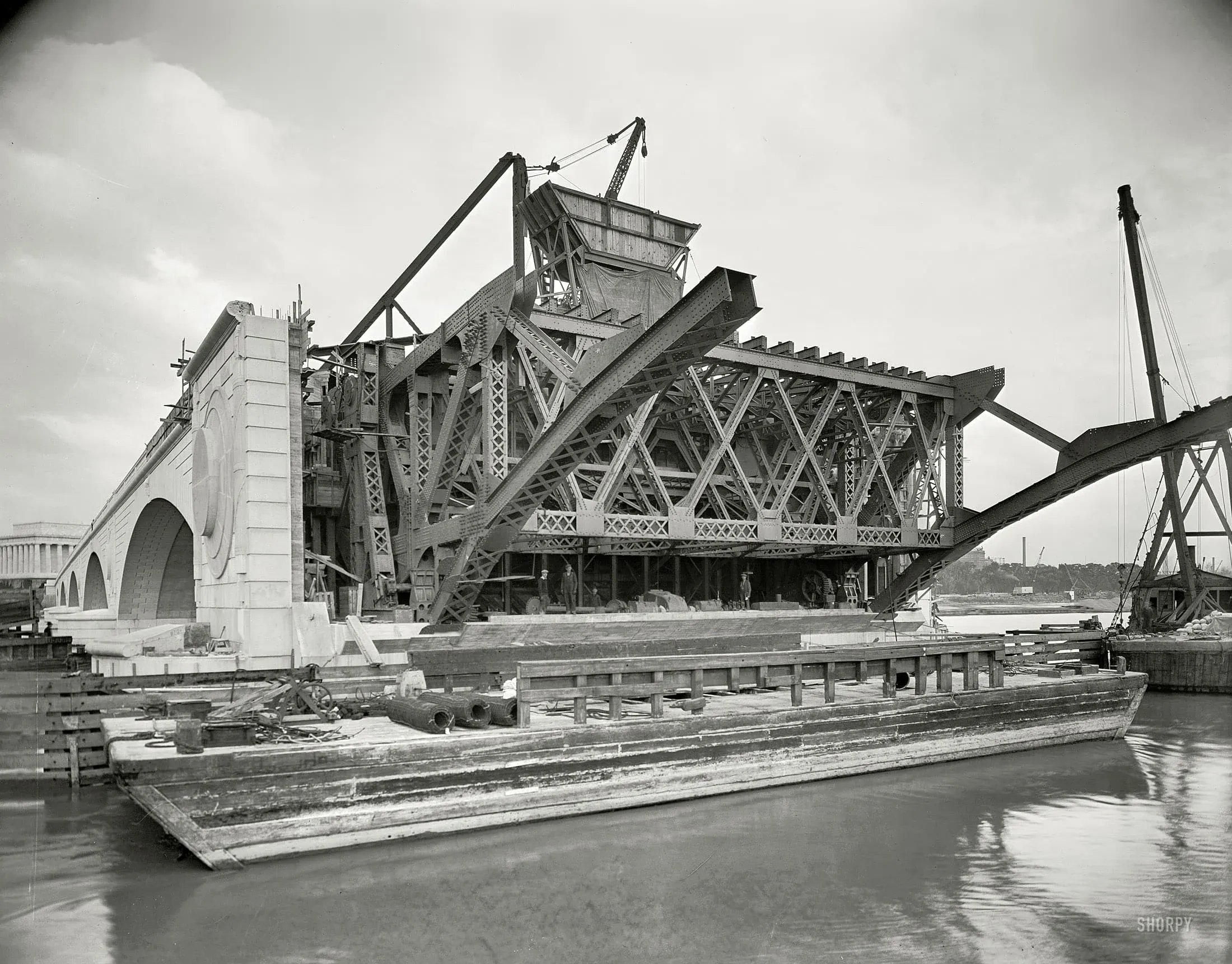
Though the construction of the Memorial Bridge was ultimately completed, lapses in funding during the Great Depression, and the operations of a nearby airport that closed long ago, halted the fulfillment of the Commission’s plans for Columbia Island. In 1940, the government constructed what is now Memorial Circle—a placeholder traffic circle—which still stands at Columbia Island adjacent to the Arlington Memorial Bridge.

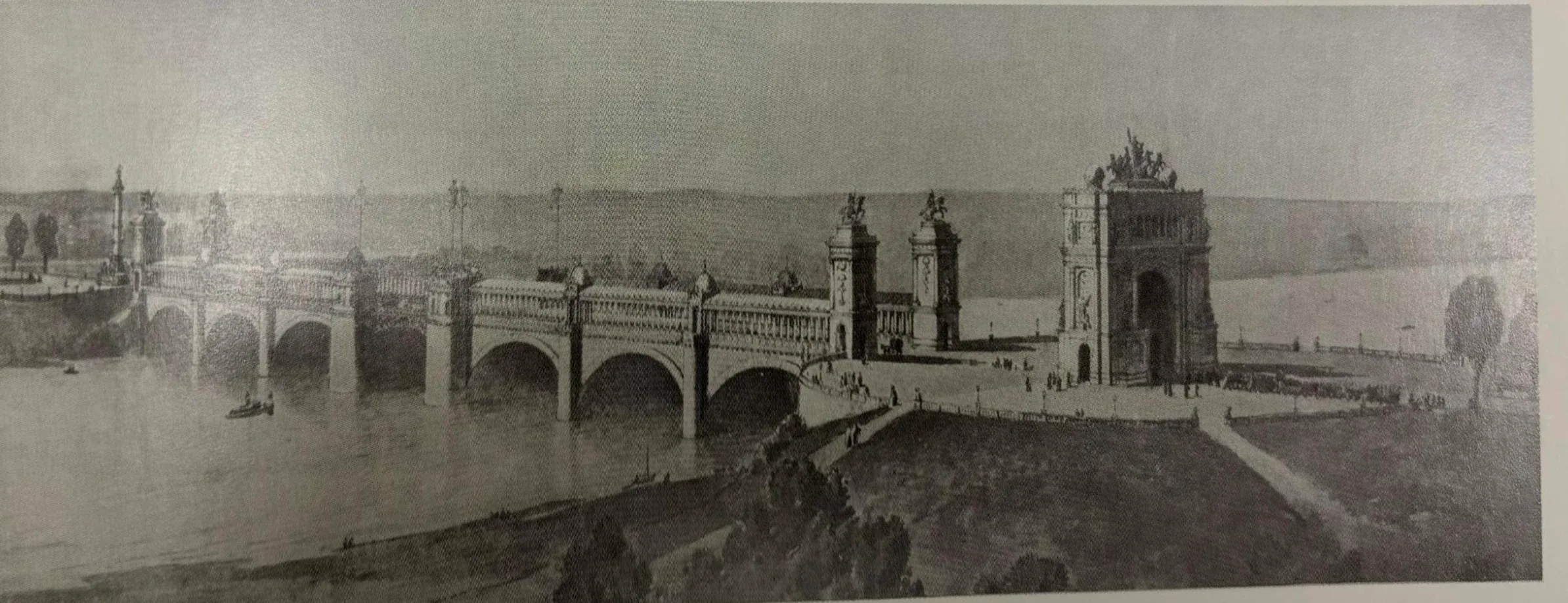
Proposed Arlington Memorial Bridge and triumphal arch, circa 1900.

Ulysses S. Grant III—the grandson of President Ulysses S. Grant, who served as Chairman of the National Capital Park and Planning Commission and Executive Director of the Arlington Memorial Bridge Commission—later lamented the state of Columbia Island’s Memorial Circle as a “temporary road with an informal circle,” noting that “the central plaza on Columbia Island had never been undertaken and seems to be absolutely essential to link together the two parts of the project, namely the main bridge itself and the entrance to Arlington Cemetery.”

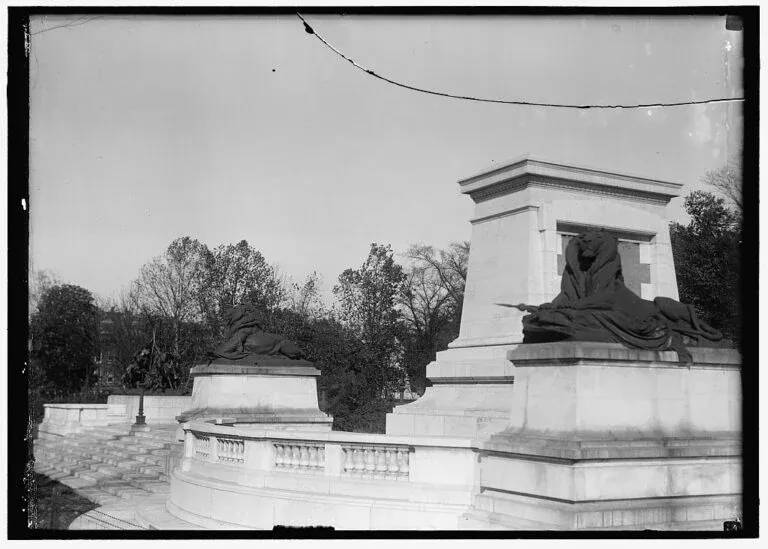
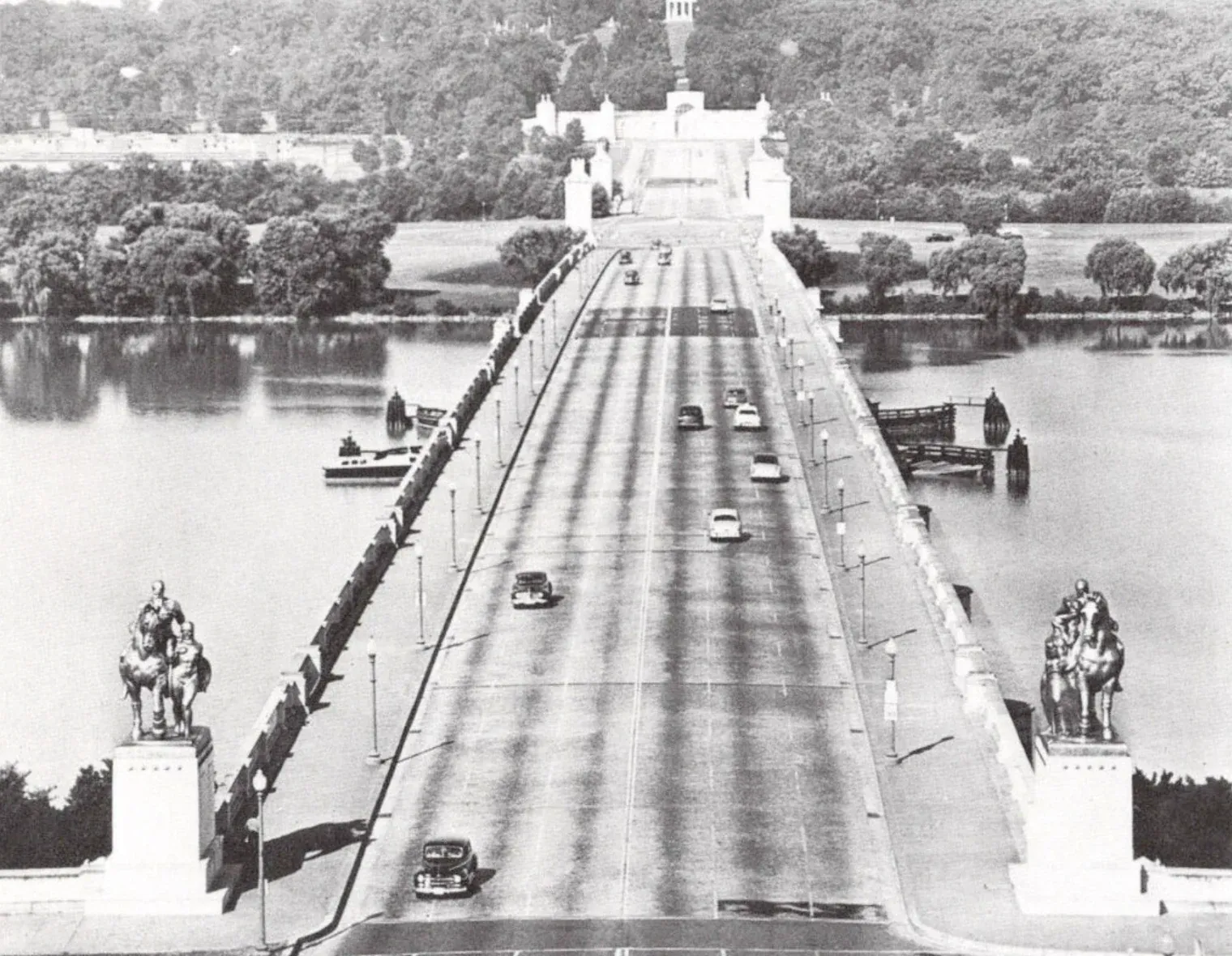
As late as the 1950s, the federal government was still completing other components of the project, including the installation of the Arts of War and Peace equestrian statues on the Washington, D.C. side of the bridge, which were a gift from the government of Italy.

President Trump is completing the original vision for a grand monument deserving of the bravest Americans who for 250 years have kept us free. This monumental arch will be a tribute to the courageous souls who have come before us—and to future generations who will carry the torch of freedom for the next 250 years and beyond.

The Military Triumphal Arch, a Building whose Joint Purpose will be the Military protection of our Capital, and far beyond, and the Beautification of Washington, D.C., will be, when completed, one of the most beautiful and powerful structures ever seen in the United States of America. This is a way to honor our Great Military Heroes throughout our Country and, in particular, those buried at Arlington National Cemetery.

Inside the two massive columns will be storage for munitions. In addition, areas on the pedestal and Observation Deck will be set aside for snipers, countersnipers, and provisions for a sniper nest. Likewise, the open ground area at the base of the Monument will be designed for launching drones and other homeland security assets, if and when necessary. The Military component will play a large role in the planning and development of this Project. It will be Highly Secretive but, at the same time, a Top Level and Lethal structure, the likes of which has not been seen in this Country before. It is long overdue, and has been sought for many years, especially by the Military.

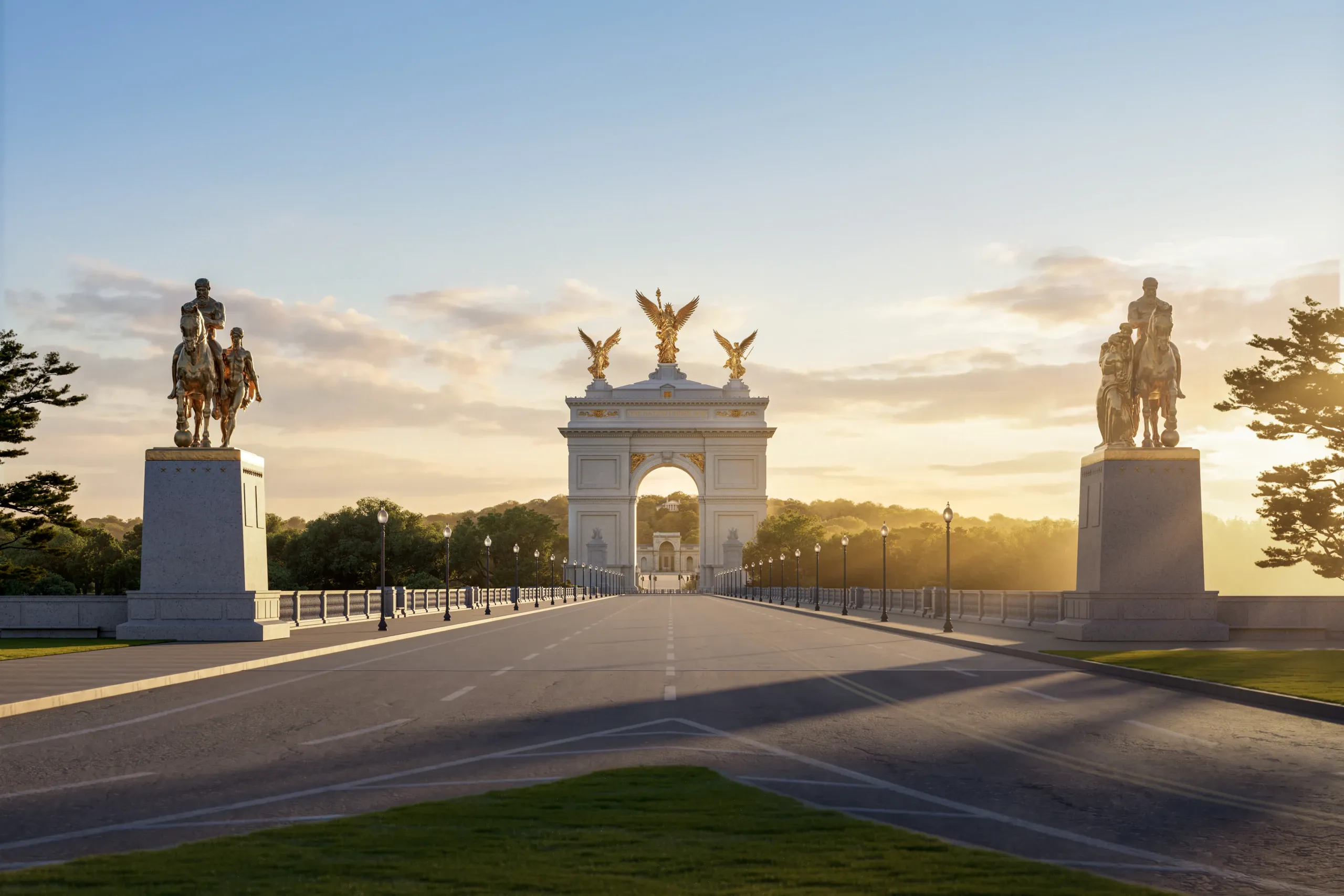
Completed Arlington Memorial Bridge with equestrian sculptures, 1951